

About Protaras
Situated in the Eastern Coast of Cyprus, Protaras is known for its blue flag golden sand beaches and tourist strip with its array of shops, bars and restaurants offering something for everyone.
Beaches
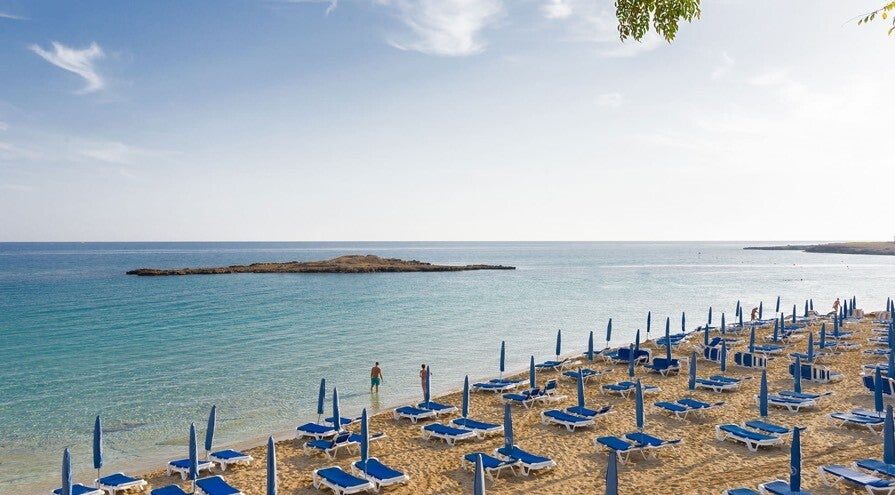
This is the "beach capital" of Cyprus. The options are endless and the vast majority of the beaches in Protaras have blue flags. Fig Tree Bay Beach was voted one of Europe’s best beaches
Fig Tree Bay Beach boasts fine, golden sands and crystal-clear waters. It takes its name from a single, solitary fig tree that has been there since the 17th century. Facilities on the beach include toilets, changing rooms, sun beds, umbrellas and water sports facilities, whilst the general area has a variety of accommodation, restaurants and kiosks.
Lifeguards with lifesaving equipment and first aid services are stationed at the beach from April – October.
The beach also offers disabled access, including a special wheelchair at the lifeguard tower to help disabled persons enter the sea with assistance from the lifeguards.

Protaras Strip
The main street of Protaras, also known as the Protaras Strip, is the vibrant center of the resort town. This roughly 1-kilometer-long, one-way road is bustling with activity and serves as the primary hub for shops, restaurants, and nightlife in the area
The main street provides a balance of coastal charm and modern amenities, making it a popular destination for families and couples alike.

Historical Protaras
Protaras, which stands on the grounds of the ancient city-state of Leukolla, offers several historical sites, most notably religious monuments and ancient tombs.
- Church of Profitis Elias: This stone-built, Byzantine-style chapel sits on a steep cliff a few meters from the heart of Protaras. Visitors must climb 153 steps (or around 300 total from the main road) to reach it, but the effort is rewarded with panoramic views of the entire area, stretching to Cape Greco and Famagusta on clear days. The church is beautifully lit at night.
- Agioi Saranta Cave Church: This unique Greek Orthodox church is hidden inside a cave in a rugged, off-the-beaten-track setting. The name refers to the Forty Martyrs of Sebaste, Roman soldiers who were killed in 320 AD for their Christian faith. The simple interior and serene atmosphere make it a peaceful place for contemplation.
- Hellenistic tombs: Located at the headland of the Fig Tree Bay peninsula, these ancient sites include a Roman-period cemetery with 19 carved tombs and a small sanctuary.